Toolkits
Practical guides for advocates, health workers, and community organizations — free to download and share.
- 10 toolkits
- Free to download
- Free to translate and share
Human Rights Violation Incident Assessment and Documentation Tool
A tool for reporting and assessing human rights violations against gay, bisexual, and queer people — built for advocates and community organizations.
Violations against gay, bisexual, and queer people are under-reported — usually not because nobody saw them, but because the people best placed to see them have no shared way to write them down. Notes end up in a dozen formats across a dozen organizations, and none of them add up to the pattern.
This tool exists to give advocates and community organizations one format. It works in two directions: report a single incident to MPact through the online form, or download the workbook and run your own documentation process — assessing what happened, recording who was affected, and keeping a record consistent enough to stand next to the next one.
What you can do with it
- Report an individual incident directly to MPact through the online form
- Assess a violation against a consistent set of questions instead of ad-hoc notes
- Keep a structured record across many incidents, in one workbook
- Hand community-level documentation to funders, journalists, or advocacy bodies in a form they can use
Every toolkit, in one place
Documentation, decriminalization, HIV programming, funding, and organizational safety. Open a toolkit for the detail, or take the file straight from the card.
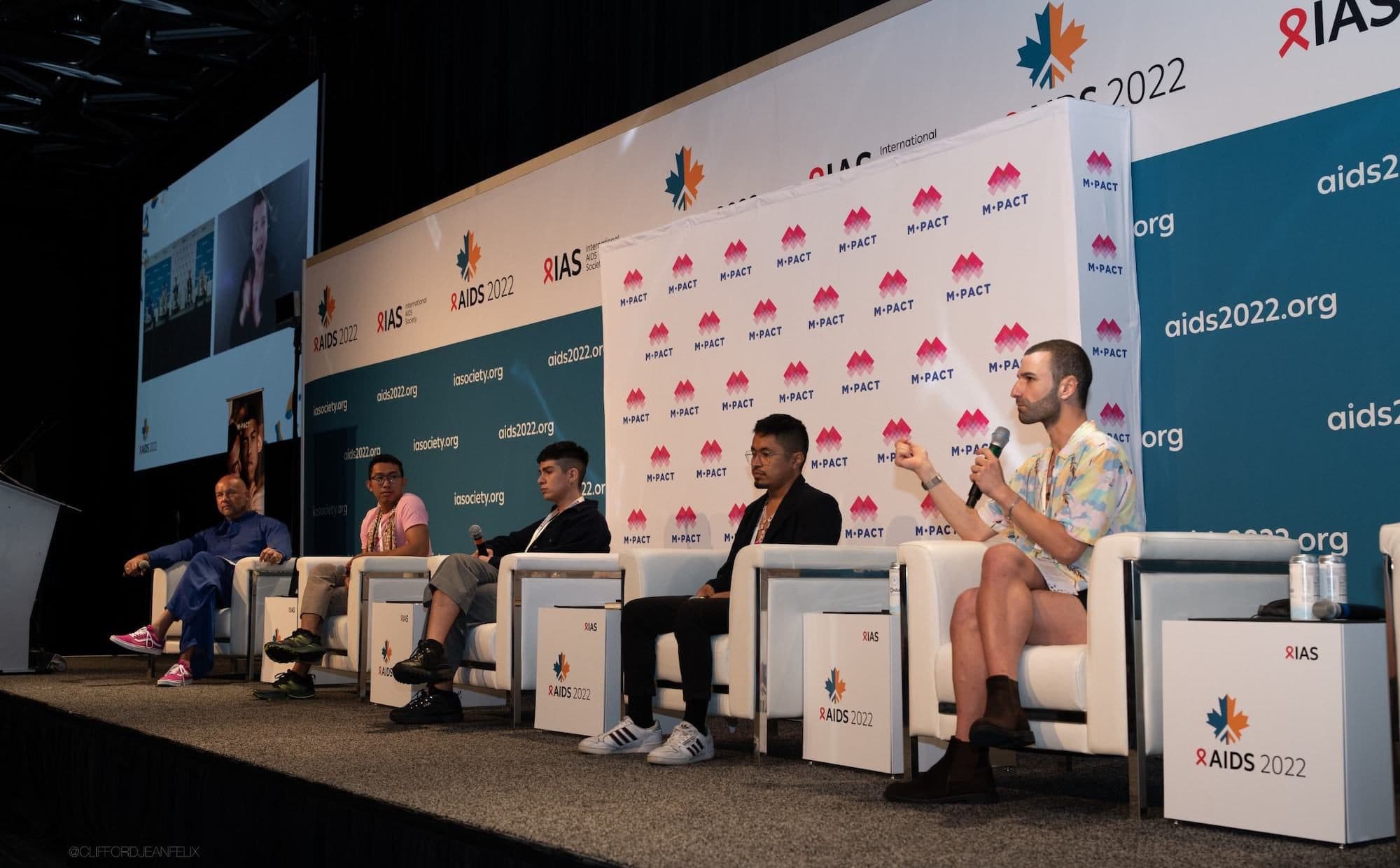
Human Rights Violation Incident Assessment and Documentation Tool
A tool for reporting and assessing human rights violations against gay, bisexual, and queer people — built for advocates and community organizations.
Violations against gay, bisexual, and queer people are under-reported — usually not because nobody saw them, but because the people best placed to see them have no shared way to write them down. Notes end up in a dozen formats across a dozen organizations, and none of them add up to the pattern.
This tool exists to give advocates and community organizations one format. It works in two directions: report a single incident to MPact through the online form, or download the workbook and run your own documentation process — assessing what happened, recording who was affected, and keeping a record consistent enough to stand next to the next one.
What you can do with it
- Report an individual incident directly to MPact through the online form
- Assess a violation against a consistent set of questions instead of ad-hoc notes
- Keep a structured record across many incidents, in one workbook
- Hand community-level documentation to funders, journalists, or advocacy bodies in a form they can use
MPact’s 2020 Annual Report
A Letter From MPact’s Director of Programs
Every struggle is a reminder of how important our communities are to everything we do as advocates.

Many comparisons have been made between COVID-19 and the early years of the AIDS epidemic. History has repeated itself in many unfortunate ways. In the same way that AIDS took our friends, our lovers, and our families from us, this new pandemic has filled our communities with loss and with grief. Life-saving medicines have yet to reach the communities that need them most. LGBTI people have been unjustly blamed for the spread of the virus and denigrated as vectors of disease.
However, just as with the AIDS activism of the 80s, we also remember that no matter the circumstances, we will not let our voices go unheard.
In 2020, MPact issued timely guidance for gay communities about understanding and navigating the COVID-19 pandemic. We adapted to the new challenge of working digitally while serving our LGBTI partners worldwide. This resulted in numerous online advocacy interventions, technical assistance programs, and trainings being presented in powerful and innovative ways. At the HIV2020 Online Conference, thousands of key population advocates from around the world worked together to reclaim the global response to HIV.
We are grateful to all our friends and partners who have remained by our side over the years. As MPact looks forward to new leadership and strategic direction, we know we will remain stronger than ever with your continued support.
Sincerely,
Dr. Mohan Sundararaj
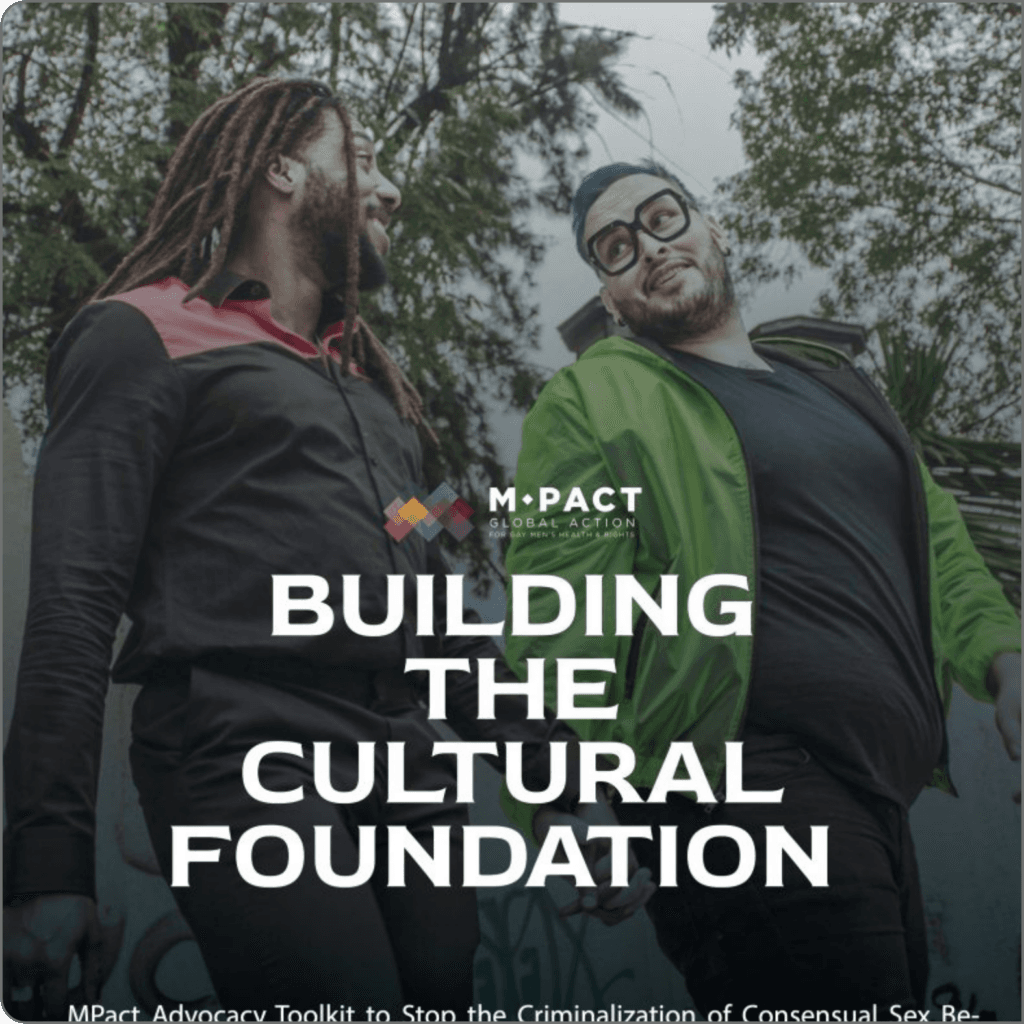
Building the Cultural Foundation Toolkit
Around the globe, the sexual behaviors of gay and bisexual men who have sex with men (GBMSM) are often the subject of restrictive laws and policies that criminalize consensual sexual activities. This criminalization of consensual same-sex sexual acts (CSSSA) leaves our communities highly vulnerable to violence, poor health outcomes, incarceration, and death. Activists fight daily to change these policies so that they and their loved ones have opportunities to find community, sexual connection, love, and a chance to thrive.
Decriminalization advocacy is ultimately about changing laws and policies; however, many GBMSM are living in contexts where direct lobbying or protesting of leadership is unlikely to result in meaningful change or may even provoke a backlash. This publication is meant to briefly provide suggested activities for advocates to strategically focus their efforts on social and cultural change-makers who have the potential to shift culture, are more likely to respond to community advocacy, and build momentum for eventual policy change.
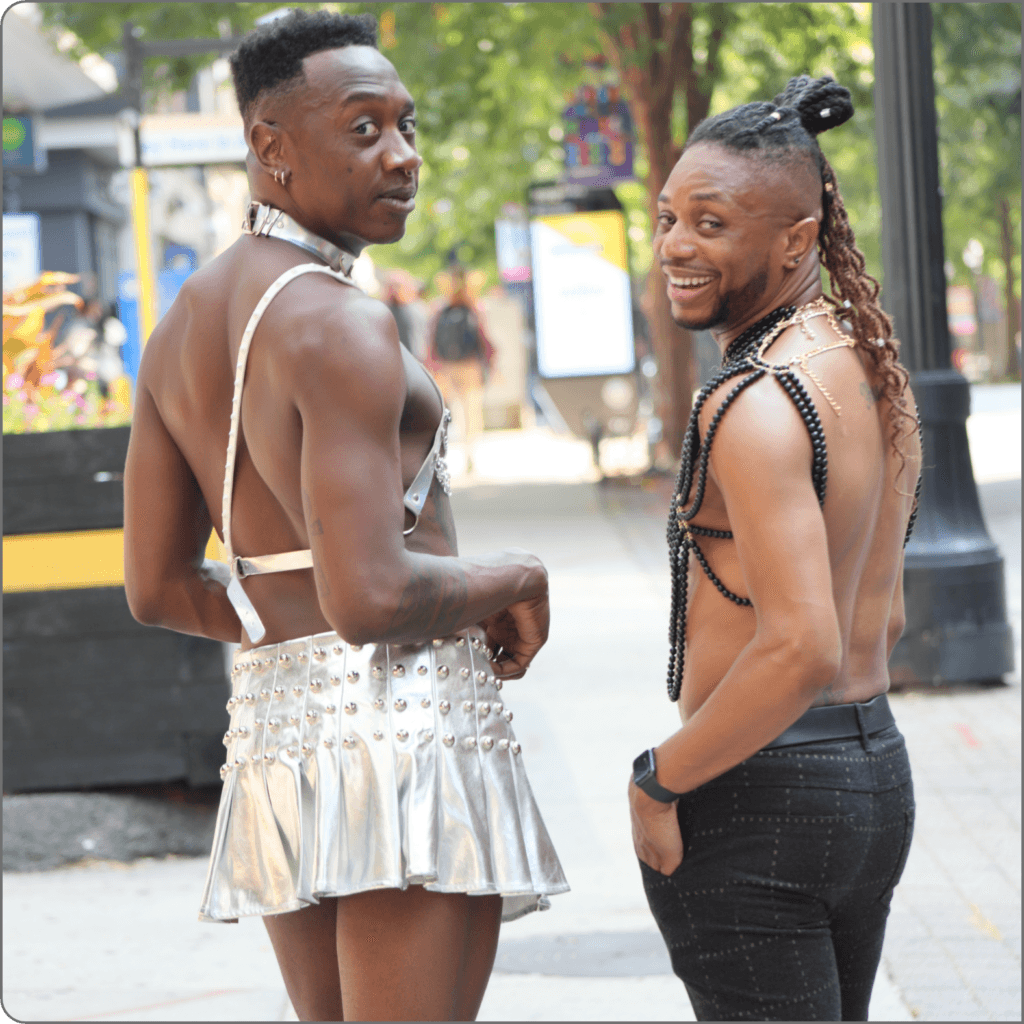
MSMIT — Men Who Have Sex With Men Implementation Toolkit
Practical Guidance for Implementing HIV and STI Programs with MSM
Men who have sex with men have played a central role in designing and implementing HIV prevention, treatment, care and support programs since the start of the HIV epidemic. For more than 30 years, their expertise, creativity, energy and fortitude have shaped the global response to the epidemic in important and indelible ways. The MSM Implementation Toolkit (MSMIT) seeks to honor and support the legacy forged by men who have sex with men at the community level and which they continue to create. It therefore gives particular attention to programs run or led by men who have sex with men themselves, in contexts where this is possible.
How to use this tool
This tool is designed for use by public-health officials and managers of HIV, AIDS and STI programmes; NGOs, including community and civil-society organizations; and health workers. It may also be of interest to international funding agencies, health policy-makers and advocates. It is meant to cover implementation of interventions across the full HIV services continuum, including prevention, treatment, care and support interventions. Each chapter explicitly or implicitly addresses one or more of the 2011 Guidelines for HIV and STI Prevention and Treatment Among MSM or the 2014 Consolidated Guidelines for Key Populations.
Six chapters organized across six principal areas of focus
The first two chapters describe approaches and principles to building programs that are led by men who have sex with men. These community-led approaches are themselves essential interventions. Chapters 3, 4 and 5 describe approaches to implementing recommended interventions for HIV prevention, care and treatment. Chapter 6 describes how to manage programs and build the capacity of organizations of men who have sex with men.
Another useful tool from WHO to set and monitor targets for HIV prevention, diagnosis, treatment and care for key populations: Click here

Global Fund Toolkit
The Community Leadership and Action Collaborative (CLAC) has developed a newly updated toolkit which aims to help to make the Global Fund policies and procedures more accessible to key populations, which is now available to download for free online.

Blueprint for Enhancing Safety & Security of LGBTQ Organizations
Practical guidance for LGBTQ organizations to assess and strengthen their physical, digital, and organizational security.
Organizations serving LGBTQ communities are targets, and the risk is rarely only physical — an office, a database, and a staff list are each exposed in a different way, and a plan that covers one of them is not a plan.
The Blueprint treats the three together: practical guidance for assessing and strengthening physical, digital, and organizational security, written for organizations that have to do it without a security budget.
What you can do with it
Run a structured assessment across physical, digital, and organizational risk
Write a security plan staff can actually follow
Decide what to do before an incident rather than during one
The Canary in the Coal Mine? Community Lessons from Global Fund GC7 Mid-Cycle Reprioritization
Community-level analysis of the Global Fund's GC7 mid-cycle reprioritization process, and what it means for key populations going forward.
When the Global Fund reprioritized mid-cycle under GC7, the decisions were made quickly and the consequences landed unevenly. This report is the community-level account of what happened.
It reads the process from the position of the key populations affected by it, and asks what that pattern predicts about the next cycle — hence the title.
What you can do with it
- Read a community-side account of the GC7 mid-cycle reprioritization
- See where key population programs absorbed the reductions
- Take evidence rather than arguments into the next funding cycle

MPact’s 10-Year PrEP Report
MPact’s 10-Year PrEP Report is officially out. Learn how PrEP transformed the queer community. It improved the health and quality of life of those who were fortunate enough to access it. Profound challenges remain in our communities, and our work must ensure all people have access to PrEP and quality health care.
Mobilizing Demand for PrEP: A Training Curriculum for Gay and Bisexual Advocates
MPact is proud to introduce a new toolkit and training module on generating demand for the HIV prevention pill pre-exposure prophylaxis, also known as PrEP among gay and bisexual men. This resource offers a menu of workshops, activities, and discussions that presenters can choose from to lead trainings in their communities.
The purpose of Mobilizing Demand for PrEP: A Training Curriculum for Gay and Bisexual Advocates is to give experienced presenters the ability to adapt these trainings to their regional contexts.
By the end of the training participants will be able to:
Implement PrEP demand generation campaigns
Define what a PrEP program is and the components of an action plan
Develop a PrEP demand generation breakthrough initiative
Discuss barriers to PrEP for gay and bisexual communities
Identify means of overcoming these barriers
Create an effective social marketing campaign
Use the tools of an effective social marketing campaign
Describe how PrEP pricing is developed
Identify how to work with peer educators and healthcare providers
This curriculum was developed to facilitate regional and in-country PrEP Demand Generation trainings in Africa and Southeast Asia in 2019 and 2020 with our partners at ITPC and with support from Bridging the Gaps. The training is mapped out to be an intensive, interactive, and enjoyable experience that is informative, encourages creativity, and is rooted in the needs of gay, bisexual, and queer communities
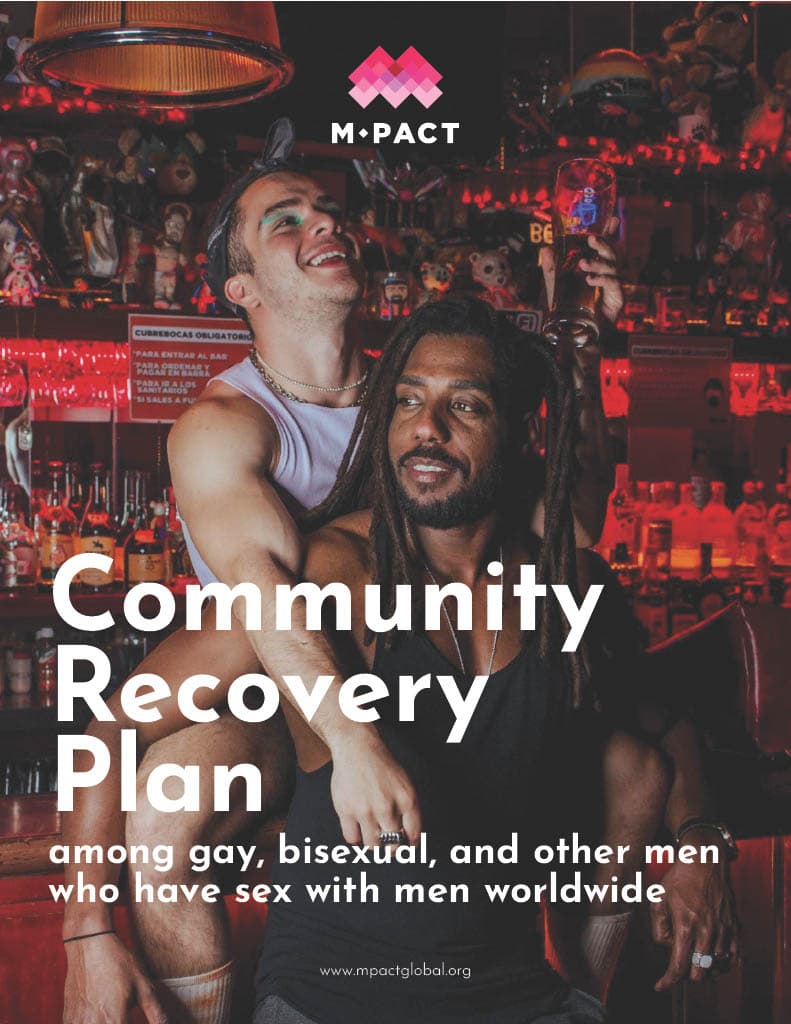
Community Recovery Plan
The COVID-19 pandemic started as an unparalleled health threat worldwide that has exacer- bated disparities in all regions of the world. The United Nations General Assembly has acknowl- edged that “the poorest and most vulnerable are the hardest hit by the pandemic.” At the front of those most vulnerable, we saw communities of gay, bisexual, and other men who have sex with men (GBMSM) shouldering an increased burden of social exclusion, stigma, and violence. Across the world, vulnerabilities in terms of health care access, employment, housing, safety, and many more were already a common experience for GBMSM communities. The pandemic wors- ened those experiences and created additional structural and social barriers to the achievement of their basic rights.
As the world took combined actions to fight the aftermath of COVID19, there was no serious and thought-out efforts from local governments to address the needs of the most vulnerable. UN independent expert on SOGI (Sexual Orientation and Gender Identity) reported that access to healthcare for LGBTIQ+ participants and people living with HIV has reduced up to 23% due to the COVID19 pandemic. In many cases, designated health facilities for GBMSM and PLHIV (people living with HIV) were assigned for COVID19 support. Even vaccination rates among these communities, were recorded low. All this led to adverse effects on the mental health of GBMSM communities and brought immense negative impact on their psychosocial wellbeing. Several services have reported increased demand for psychosocial assistance and four times more suicidal tendencies among the LGBTIQ+ people during the pandemic.
As such, the objective of this report is to explore a recovery plan for GBMSM communities, comprehensive of economic and food security needs, decreased healthcare access response, and strategies to tackle the increased level of violence. We hope this could be a start to produce sustainable policy strategies to tackle the current and future challenges faced by GBMSM communities during the time of pandemic, and in the face of any future similar threats.
Need a toolkit that isn't here?
Tell us what your organization is missing. These resources exist because advocates asked for them.