← All toolkits
Advocacy · COVID-19

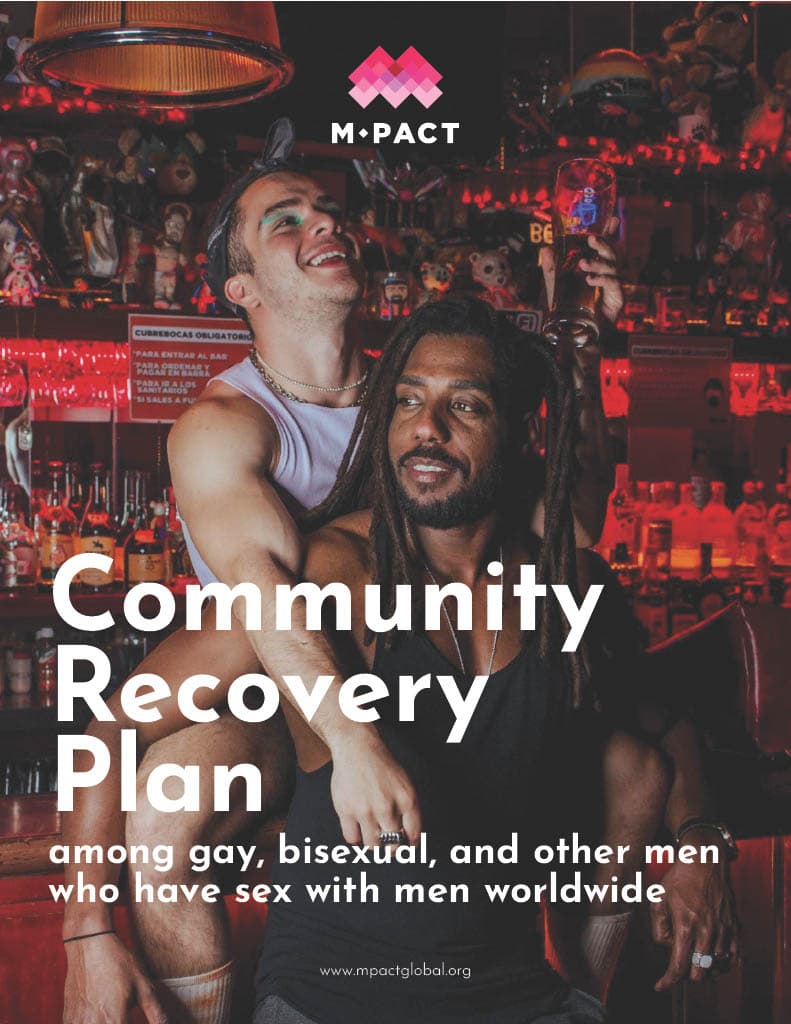
Community Recovery Plan

Download the PlanPDF · 3.1 MB

Free to use, translate, and share.

The COVID-19 pandemic started as an unparalleled health threat worldwide that has exacer- bated disparities in all regions of the world. The United Nations General Assembly has acknowl- edged that “the poorest and most vulnerable are the hardest hit by the pandemic.” At the front of those most vulnerable, we saw communities of gay, bisexual, and other men who have sex with men (GBMSM) shouldering an increased burden of social exclusion, stigma, and violence. Across the world, vulnerabilities in terms of health care access, employment, housing, safety, and many more were already a common experience for GBMSM communities. The pandemic wors- ened those experiences and created additional structural and social barriers to the achievement of their basic rights.

As the world took combined actions to fight the aftermath of COVID19, there was no serious and thought-out efforts from local governments to address the needs of the most vulnerable. UN independent expert on SOGI (Sexual Orientation and Gender Identity) reported that access to healthcare for LGBTIQ+ participants and people living with HIV has reduced up to 23% due to the COVID19 pandemic. In many cases, designated health facilities for GBMSM and PLHIV (people living with HIV) were assigned for COVID19 support. Even vaccination rates among these communities, were recorded low. All this led to adverse effects on the mental health of GBMSM communities and brought immense negative impact on their psychosocial wellbeing. Several services have reported increased demand for psychosocial assistance and four times more suicidal tendencies among the LGBTIQ+ people during the pandemic.

As such, the objective of this report is to explore a recovery plan for GBMSM communities, comprehensive of economic and food security needs, decreased healthcare access response, and strategies to tackle the increased level of violence. We hope this could be a start to produce sustainable policy strategies to tackle the current and future challenges faced by GBMSM communities during the time of pandemic, and in the face of any future similar threats.
More toolkits

See all →
Documentation · Advocacy

Human Rights Violation Incident Assessment and Documentation Tool

A tool for reporting and assessing human rights violations against gay, bisexual, and queer people — built for advocates and community organizations.

Violations against gay, bisexual, and queer people are under-reported — usually not because nobody saw them, but because the people best placed to see them have no shared way to write them down. Notes end up in a dozen formats across a dozen organizations, and none of them add up to the pattern.

This tool exists to give advocates and community organizations one format. It works in two directions: report a single incident to MPact through the online form, or download the workbook and run your own documentation process — assessing what happened, recording who was affected, and keeping a record consistent enough to stand next to the next one.

What you can do with it

  • Report an individual incident directly to MPact through the online form
  • Assess a violation against a consistent set of questions instead of ad-hoc notes
  • Keep a structured record across many incidents, in one workbook
  • Hand community-level documentation to funders, journalists, or advocacy bodies in a form they can use
Read more →
Report

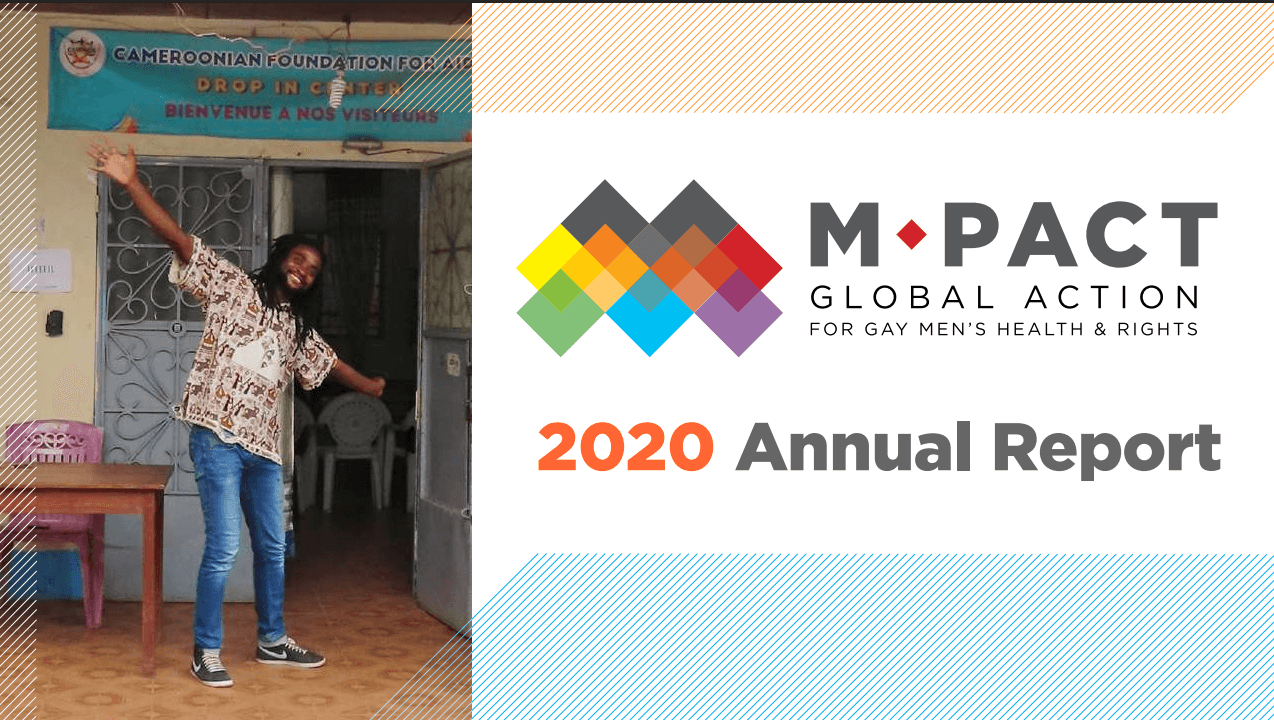
MPact’s 2020 Annual Report

A Letter From MPact’s Director of Programs

Every struggle is a reminder of how important our communities are to everything we do as advocates.

annual-report-2020

Many comparisons have been made between COVID-19 and the early years of the AIDS epidemic. History has repeated itself in many unfortunate ways. In the same way that AIDS took our friends, our lovers, and our families from us, this new pandemic has filled our communities with loss and with grief. Life-saving medicines have yet to reach the communities that need them most. LGBTI people have been unjustly blamed for the spread of the virus and denigrated as vectors of disease.

However, just as with the AIDS activism of the 80s, we also remember that no matter the circumstances, we will not let our voices go unheard.

In 2020, MPact issued timely guidance for gay communities about understanding and navigating the COVID-19 pandemic. We adapted to the new challenge of working digitally while serving our LGBTI partners worldwide. This resulted in numerous online advocacy interventions, technical assistance programs, and trainings being presented in powerful and innovative ways. At the HIV2020 Online Conference, thousands of key population advocates from around the world worked together to reclaim the global response to HIV.

We are grateful to all our friends and partners who have remained by our side over the years. As MPact looks forward to new leadership and strategic direction, we know we will remain stronger than ever with your continued support.

Sincerely,
Dr. Mohan Sundararaj

Read more →
Decriminalization · Advocacy

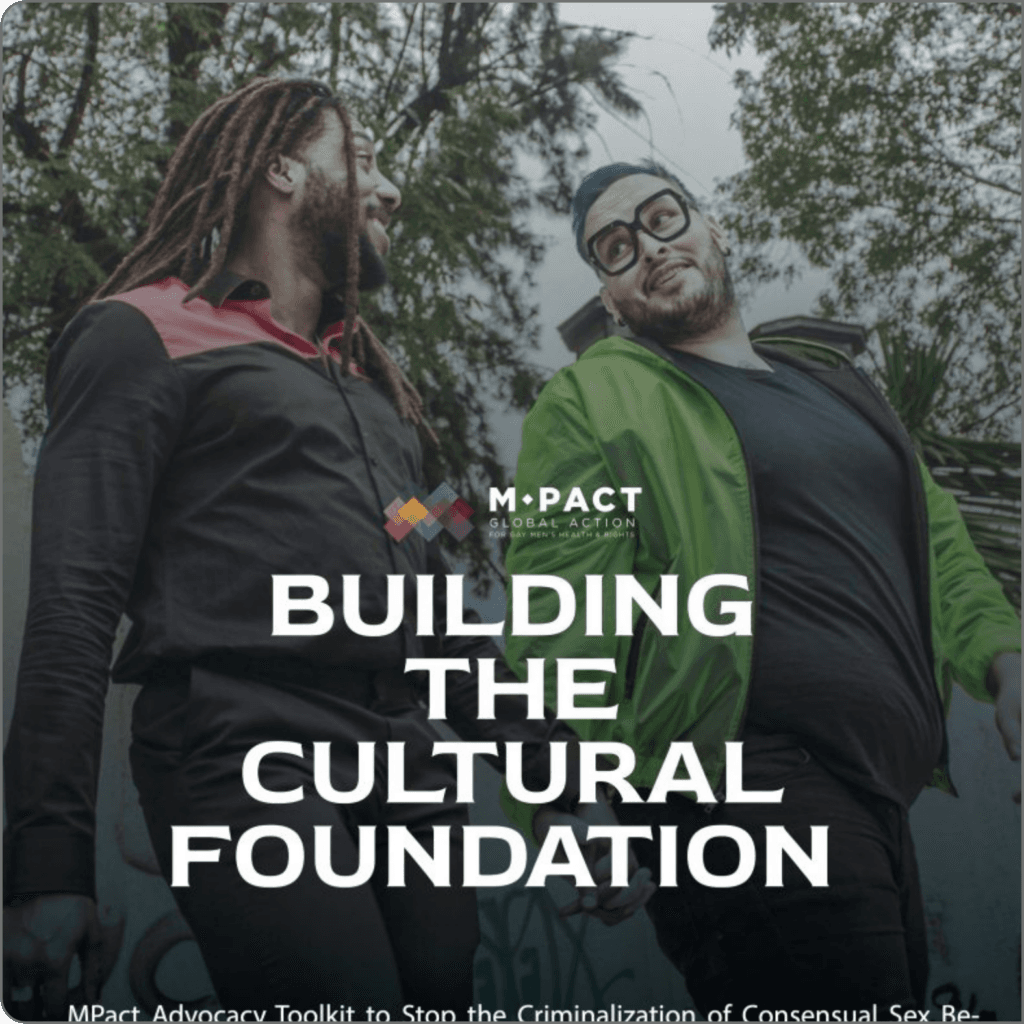
Building the Cultural Foundation Toolkit

Around the globe, the sexual behaviors of gay and bisexual men who have sex with men (GBMSM) are often the subject of restrictive laws and policies that criminalize consensual sexual activities. This criminalization of consensual same-sex sexual acts (CSSSA) leaves our communities highly vulnerable to violence, poor health outcomes, incarceration, and death. Activists fight daily to change these policies so that they and their loved ones have opportunities to find community, sexual connection, love, and a chance to thrive.

Decriminalization advocacy is ultimately about changing laws and policies; however, many GBMSM are living in contexts where direct lobbying or protesting of leadership is unlikely to result in meaningful change or may even provoke a backlash. This publication is meant to briefly provide suggested activities for advocates to strategically focus their efforts on social and cultural change-makers who have the potential to shift culture, are more likely to respond to community advocacy, and build momentum for eventual policy change.

Read more →