LGBTQ Health Care: How Stigma Limits Access
Learn how stigma and discrimination limit LGBTQ health care access, from HIV and mental health to confidentiality, and what providers can do to help.
By Mpact Global11 min read
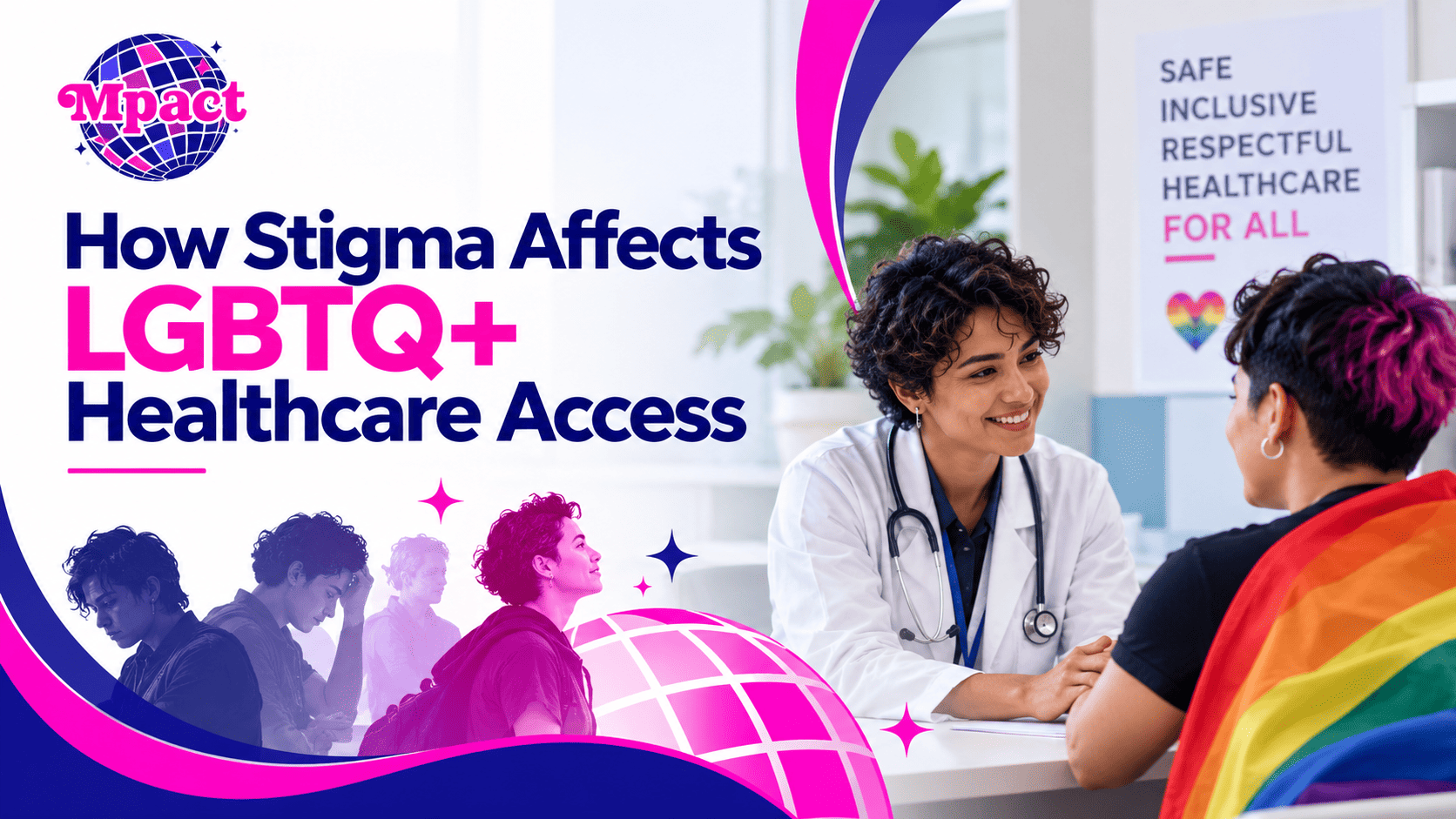
LGBTQ Health Care is about more than simply having healthcare services available.It’s also about whether LGBTQ+ people can feel safe accessing those services, without being made to feel judged, stigmatised or having their trust broken by a breach of confidentiality.
According to the World Health Organization (WHO), stigma and discrimination can create barriers to healthcare access and affect the physical and mental well-being of LGBTIQ+ people.
For many LGBTQ+ people a bad experience with healthcare can have long term knock on effects that go way beyond one appointment itself. The fear of being discriminated against can be such a powerful deterrent that people may not even bother seeking HIV testing, sexual health advice, mental health support or just the basic stuff like preventative care.
Understanding the relationship between LGBTQ Stigma and healthcare access is therefore essential for building more inclusive and equitable health systems.
What Is LGBTQ Health Care?
LGBTQ health care is about getting healthcare that meets the physical, mental and sexual health needs of lesbian, gay, bisexual, transgender, queer, intersex people and others who don't quite fit into the mainstream , and who might need a bit more care and understanding.
The WHO recognizes that LGBTIQ+ health is influenced not only by individual health needs but also by social and structural factors such as stigma, discrimination, violence, and barriers within healthcare systems.
For Mpact Global, LGBTQ+ health is closely connected to HIV, sexual health, human rights, community leadership, and equitable access to healthcare.
LGBTQ Health Care Goes Beyond HIV
HIV remains a pressing concern - and an important area of focus - in the world of LGBTQ+ health - and that's particularly true for gay and bisexual men & other men who have sex with men. But let's be clear: LGBTQ+ health care encompasses a whole lot more than just HIV services.
It can include:
HIV prevention, testing, treatment, and support
Sexual and reproductive health
Mental health services
Vaccination
Primary healthcare
Preventive screening
Gender-affirming healthcare
Substance-use support
Health education
Harm reduction
Mpact Global's What We Do programs reflect this broader approach through work involving HIV, sexual health, vaccination, advocacy, community leadership, and queer health.
Why Does LGBTQ Stigma Affect Healthcare Access?
LGBTQ Stigma can affect healthcare access before, during, and after a medical appointment.
Someone mayl avoid seeking care because they're dreading the discrimination they might encounter. Others will leave a doctor after one bad experience - and not just move on to another one. And then there are those who just won't share the important info about their sexual orientation, gender identity, or sex life - because they genuinely don't feel safe enough.
A review published in BMC Public Health discovered that the stigma affecting trans and gender diverse people is a nasty problem that pops up at loads of different levels - individual, interpersonal and even structural - & this can be a major barrier to getting the healthcare that these people need. The research is available through PubMed.
What Does LGBTQ Healthcare Stigma Look Like?
Healthcare stigma does not always involve an explicit refusal of treatment.
It can include:
Judgmental communication
Assumptions about sexual behavior
Misgendering
Inappropriate questions
Breaches of confidentiality
Lack of provider knowledge
Discriminatory attitudes
Inadequate healthcare policies
Fear of disclosure
Lack of LGBTQ-inclusive services
The WHO identifies discrimination and inappropriate treatment within healthcare settings as important factors affecting LGBTIQ+ health and access to services.
How Does Stigma Affect a Person's Healthcare Journey?
Stigma can influence a person's healthcare journey at several different stages.
Healthcare stage | Possible effect of stigma | Potential consequence |
Before seeking care | Fear of discrimination | Delayed healthcare |
Registration | Lack of inclusive systems | Discomfort or concealment |
Consultation | Judgment or assumptions | Reduced trust |
After treatment | Negative experience | Provider avoidance |
Community level | Normalized discrimination | Lower healthcare engagement |
Structural level | Restrictive policies | Reduced access to services |
A 2024 KFF survey found that 33% of LGBT adults in the United States reported being treated unfairly or with disrespect by a doctor or other healthcare provider during the previous three years, compared with 15% of non-LGBT adults.
The survey also shows that a negative run in with healthcare can actually have a lasting impact on a person’s future dealings with the health care system - making it less likely for them to go looking for help or maybe even to switch to a different doctor
These numbers are based in the US alone, but they paint a pretty clear picture of how treatment discrimination can make people think twice before stepping foot in a clinic.
How Are LGBTQ Stigma and Mental Health Connected?
LGBTQ and mental health are closely connected to the social environments in which people live.
Being LGBTQ+ does not itself cause mental illness. However, stigma, discrimination, violence, social exclusion, and other forms of minority stress can negatively affect mental health.
The WHO recognizes that transgender and gender-diverse people can experience stigma and discrimination that affect their health and well-being.
The KFF survey also found significant mental health concerns among LGBT adults in the United States, including higher reported levels of anxiety and poorer self-reported mental health compared with non-LGBT adults.
Why Does Trust Matter in Mental Healthcare?
Mental healthcare often requires people to discuss highly personal experiences.
If someone's got the feeling that a healthcare provider is gonna judge them based on anything they say - whether that's about relationships, sexual health, their gender identity or their family situation &c then they're gonna be a lot less likely to want to discuss it with them.
This makes it way harder for the healthcare provider to get a handle on what this person really needs - and therefore provide the right kind of support.
Creating genuine LGBTQ-inclusive mental health services therefore isn't just about offering a few appointments : you need trust, confidentiality, respect, and - most importantly - a healthcare system that actually understands where these patients are coming from.
How Does Stigma Affect HIV and Sexual Health Services?
Stigma is particularly important when discussing HIV and sexual health.
According to UNAIDS, HIV-related stigma and discrimination can create barriers to HIV prevention, testing, treatment, care, and support.
Fear of being judged or having sensitive information disclosed can discourage people from seeking services.
For gay and bisexual men and other men who have sex with men, these barriers can also interact with criminalization, violence, and social exclusion.
Mpact Global's work focuses strongly on these connections through community-led HIV and sexual health programs and advocacy.
Why Is Confidentiality Important?
Confidentiality is a pretty big deal when it comes to LGBTQ health care.
People have reason to worry that private medical info - things like their sexual orientation, gender identity, hiv status, or anything they might be dealing with sexually - could get shared without their permission.
UNAIDS identifies concerns around confidentiality and negative provider attitudes as factors that can discourage members of key populations from accessing healthcare.
If a healthcare system is serious about protecting patients privacy, that can help make it safe for LGBTQ+ patients to get the help they need
What Happens When Healthcare Systems Ignore Stigma?
Ignoring LGBTQ Stigma can create a cycle:
Stigma creates fear of judgment and discrimination, causing individuals to delay seeking healthcare. This delay often results in unmet health needs, which can reduce trust in healthcare services. As trust declines, people become more likely to avoid healthcare altogether, reinforcing stigma and perpetuating a cycle of poor health outcomes and continued healthcare avoidance.
This cycle can affect both individual health and broader public health outcomes.
Mpact Global's work demonstrates why healthcare access must be considered from the perspective of the communities receiving services.
For example, Mpact's work around vaccination highlights barriers such as inaccessible clinics, inadequate intake systems, and previous negative healthcare experiences. Its QueerVax initiative focuses on making vaccination information and services more accessible to queer communities.
Similarly, Mpact's work on PrEP access in Southeast Asia highlights the difference between a health service being available in policy and being genuinely accessible to the people who need it.
How Can Criminalization Affect Healthcare Access?
In some countries, LGBTQ+ healthcare access is also influenced by laws and policies.
That can make people seriously hesitant to go to the doctor or open up to healthcare workers about what's really going on - and that's a problem.
WHO identifies criminalization, discrimination, violence, and other human-rights violations as factors that can negatively affect LGBTIQ+ health and access to healthcare.
Mpact Global has also documented how criminalization and human-rights challenges can affect health access for gay, bisexual, and queer communities in different regions.
The thing is, LGBTQ+ healthcare is as much a human rights issue as it is a health issue.
How Can Healthcare Systems Reduce LGBTQ Stigma?
Changing how we see and talk about LGBTQ+ people - what we call 'reducing LGBTQ stigma' - will take work at three levels: individual, the organisations we belong to, and the systems of government that shape the way our societies work.
Healthcare providers, health institutions, policymakers, community organizations, and LGBTQ+ communities all have a role to play.
What Can Healthcare Providers Do?
Healthcare professionals can help create more inclusive services by:
Using respectful language
Avoiding assumptions about patients
Protecting confidentiality
Asking relevant questions without judgment
Learning about LGBTQ+ health needs
Understanding the effects of stigma
Connecting patients with appropriate community resources
Participating in LGBTQ health education
Mpact Global's Physician Council brings physicians together to advance LGBTQ+ health and human rights through education, advocacy, research, and engagement.
What Can Healthcare Systems Do?
Healthcare organizations can address stigma through practical changes.
Area | Inclusive approach |
Staff training | LGBTQ health and anti-discrimination education |
Patient records | Inclusive demographic information |
Privacy | Strong confidentiality practices |
Communication | Respectful and inclusive language |
Services | Accessible LGBTQ-inclusive healthcare |
Community engagement | Include LGBTQ+ communities in program design |
Outreach | Partner with trusted community organizations |
Policies | Clear anti-discrimination protections |
Data | Collect relevant information responsibly |
The WHO recommends strengthening health systems so people can access healthcare without discrimination related to sexual orientation, gender identity, gender expression, or sex characteristics.
How Can Community-Led Healthcare Improve Access?
Communityled healthcare can be a game-changer in spotting the obstacles that traditional health setups all too often gloss over .
Mpact Global are big on community leadership & they team up with queer led orgs & leaders to make a real difference in the health of queer ppl, defend their rights, and really get some momentum behind their movements.
Community organizations are a vital link between healthcare systems & the LGBTQ+ communities they serve - they help build that trust.
For example, Mpact's QueerVax campaign emphasizes community-led outreach and accessible vaccination information for queer communities.
Why Does Community Trust Matter?
A healthcare service can exist without being truly accessible.
PrEP may be available, but people may not know where to obtain it.
HIV treatment may exist, but fear of disclosure may discourage someone from seeking it.
Mental health services may be available, but a person may not trust the provider.
This is why improving LGBTQ Health Care requires attention not only to medical services but also to trust, accessibility, safety, and community participation.
What Can Individuals and Allies Do?
Reducing LGBTQ Stigma is not only the responsibility of LGBTQ+ people.
Healthcare professionals, policymakers, researchers, organizations, funders, educators, and allies can all contribute to more inclusive healthcare.
Practical steps include:
Listen to LGBTQ+ communities.
Support community-led organizations.
Challenge discriminatory practices.
Protect patient confidentiality.
Support inclusive healthcare programs.
Promote evidence-based health education.
Mpact Global's Anal About My Health campaign is one example of community-informed health education addressing sexual health and stigma.
What Is Mpact Global's Role in LGBTQ Health Care?
Mpact Global works at the intersection of queer health, HIV, human rights, community leadership, and global advocacy.
Its work includes community-led health programs, advocacy, capacity building, health campaigns, and resources for healthcare workers and community organizations.
Mpact's What We Do portfolio includes work related to HIV, sexual health, vaccination, harm reduction, advocacy, and queer rights.
Its Physician Council also brings healthcare professionals into conversations about LGBTQ+ health and human rights.
This approach reflects an important principle: improving LGBTQ Health Care is not simply about encouraging people to seek healthcare. Healthcare environments themselves must become safer, more accessible, and more inclusive.
“Healthcare is a right for everyone and that includes access to vaccinations.” — Mpact Global
Conclusion
LGBTQ Health Care cannot be separated from stigma, discrimination, trust, and human rights.
Evidence from the World Health Organization shows that stigma and discrimination can create barriers to healthcare for LGBTIQ+ people. Research also demonstrates that negative healthcare experiences can influence whether people seek care, trust providers, and continue using healthcare services.
Reducing LGBTQ Stigma therefore requires more than awareness.
Healthcare systems need inclusive policies, respectful providers, strong confidentiality protections, community participation, and accessible services.
For organizations such as Mpact Global, improving queer health means connecting healthcare access with dignity, equality, and human rights.
Everyone should be able to seek the healthcare they need without fear of discrimination.
Frequently asked questions
The global attention paid to the sexual health and human rights of men who have sex with men is shrinking. That’s why we need your support.